Heating Oil
Revision
Tank inspection with visual cleaning
Sillerebühl
We offer two revision options
- Revision with interior cleaning
- the visual inspection
Both must be carried out and reported every ten years. We recommend an inspection with internal cleaning because: Deposits are removed, blockages are reduced, combustion is more optimal, damage is detected early, maximum operational safety is ensured, the value of your property is maintained and insurance cover is guaranteed.
We recommend a tank inspection with internal cleaning to proactively optimize your system:
- We eliminate ageing oil sludge and other residues to ensure the optimum performance and cleanliness of your entire system.
- The risk of clogging of filters and burner nozzles is eliminated preventively, which enables maximum combustion efficiency and therefore also environmental compatibility.
- Early detection of corrosion damage and wear and tear proactively protects your system and secures the long-term value of your property.
- We guarantee the operational reliability of your tank system and relieve you of personal responsibility by providing full insurance cover.
A tank overhaul with internal cleaning in a 10-year cycle is a Essential maintenance milestone. Temperature fluctuations generate condensation, which sinks together with fine particles to form an aggressive oil sludge (electrolyte). This sludge becomes a galvanic element, which sooner or later massively disrupts the function of the oil burner and leads to blockages.
With our interior cleaning deactivate we eliminate this risk. We remove all deposits using state-of-the-art processes and guarantee environmentally compliant disposal in accordance with the strictest legal regulations. This is followed by a comprehensive Technology check of the mechanical tank condition and the calibration of all safety-related components (such as filling safety device, tank compartment and leak detector). We optimize your system for the next ten years.
Workflow:
A visual inspection of heating oil tanks is an external, visual inspection of the tank, the supply lines and the tank compartment for condition and tightness, which is required at least every 10 years for systems requiring a permit.
We recommend a visual inspection only for tanks that will be removed or taken out of service within the next 3 years.
No liability can be accepted for any defects and the resulting damage.
Do you have any questions or would you like a personal consultation? Contact us – together we will find the best solution for you.
Refurbishment
Thorough analysis and planning before implementation are crucial. We support you with clarifications and a refurbishment offer. We differentiate between small, underground systems and systems installed in tank rooms. All the details about your tank renovation.
We differentiate between small tank systems, underground tanks and tanks that are located in a tank room.
Refurbishment with inner tank shell
Here you will find everything you need to know about tank refurbishment.
Haben Sie Fragen oder wünschen ein persönliches Gespräch? Kontaktieren Sie uns jetzt – wir finden gemeinsam die beste Lösung für Sie.
New tank systems
New plant
The design requires extensive expertise. We offer a wide range of tank types: PE combination tanks, individual tanks, battery systems, steel tanks for cellars, cylindrical steel tanks for underground installation and spherical tanks. We realize the perfect solution for every situation.
- PE combination tanks
- Single tanks
- Battery tank systems
- Steel tanks for the cellar
- Cylindrical steel tanks
- Spherical tank
Whether vision, limited space or complex construction plans: we transform your specific situation into a pioneering tank solution.
Do you have any questions or would you like a personal consultation? Contact us – together we will find the best solution for you.
Line construction
Line construction Fuels snow groomer
Professional planning and execution of the lines is essential. We install:
- Vent lines
- Product lines, monitored or unmonitored
- Vapor recovery lines
- Burner lines
- Water pipes – only for rainwater or gray water
On request, we are happy to manage the entire coordination between the construction management and all the tradespeople involved.
Haben Sie Fragen oder wünschen ein persönliches Gespräch? Kontaktieren Sie uns jetzt – wir finden gemeinsam die beste Lösung für Sie.
Decommissioning the tank
Professional decommissioning must be carried out by a specialist company. Our work steps: Removal of residual oil and sludge, cleaning and degassing, flushing of the lines, safe sealing of the lines (“blanking”), official deregistration with the authorities, carrying out any covering work, ensuring tank room ventilation and compliance with all safety regulations.
The following work is carried out during a shutdown:
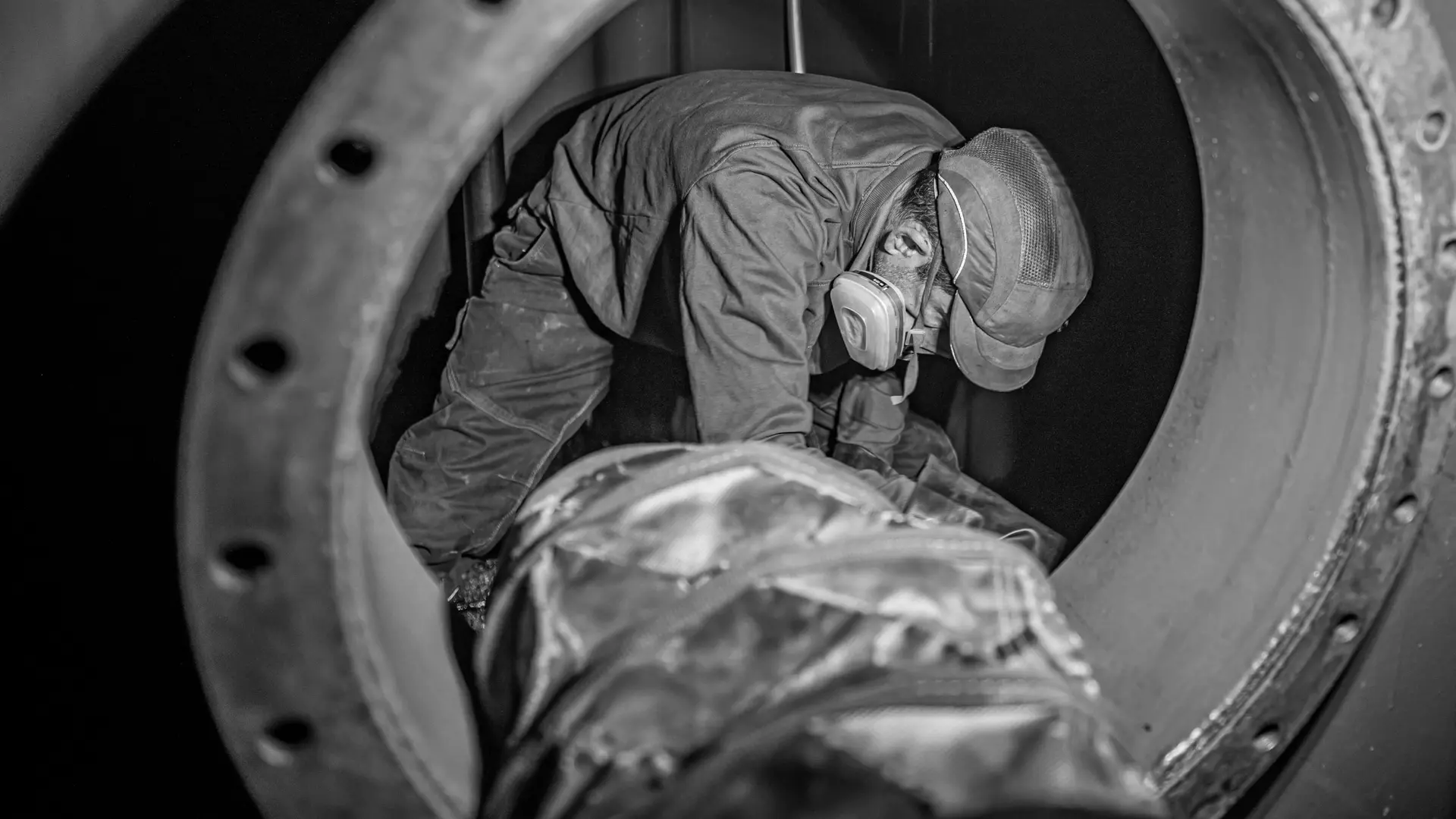
- We remove residual oil and all sludge from the tank to maximize environmental safety.
- Professional de-oiling and de-gassing of the tank, followed by flushing of the entire product line.
- Permanent "blanking" of the lines ensures that erroneous refilling is physically impossible.
- We take care of the complete official deregistration of the tank.
- We ensure maximum cleanliness and safety on site - through professional covering work, the creation of dust protection walls and controlled ventilation of the tank room.
- Here you will find the information sheet for the inspection of newly constructed storage facilities.
 Download information sheet on the inspection of newly created storage facilities
Do you have any questions or would you like a personal consultation? Contact us – together we will find the best solution for you.
Dismantling
Tank dismantling using the cold process
Tank disassembly
Tank disassembly
Dismantling must be carried out by a trained specialist. Our work steps:
- Ensuring access
- Ventilation of the tank compartment
- Breakdown into segments
- Removal and environmentally friendly disposal
- Compliance with safety regulations
We rely on pioneering dismantling technology: our tanks are almost exclusively dismantled using the innovative cold process. We use specialized high-performance machines for precise and controlled dismantling, which guarantees 100% smoke and soot-free processing. This is an unbeatable advantage for the environment and takes the pressure off our specialists. Cutting with acetylene and oxygen is only used in the most complex exceptional cases.
Haben Sie Fragen oder wünschen ein persönliches Gespräch? Kontaktieren Sie uns jetzt – wir finden gemeinsam die beste Lösung für Sie.

Frequently asked questions
When is the ideal time to clean the interior?
Heating oil tanks should be inspected with internal cleaning every ten years.
The last revision date: Where can I view it?
The date of the last work carried out can be found on the audit sticker on the tank compartment door.
Are the costs higher for inspections in winter?
No. We will provide you with a temporary heating system free of charge.
What is the maximum number of liters that can be removed without additional costs?
Maximum 15,000 liters.